WBR fire district reports rising call volumes, faster response times in first half of 2026
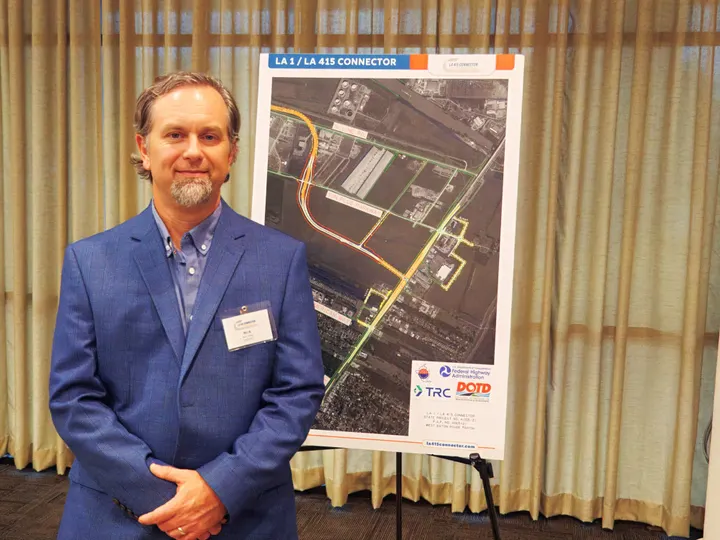
A representative of Browning Associates LLC told the WBR Fire Protection District No. 1 Board of Commissioners on July 23 that call volumes rose nearly 12% in the first half of 2026 while average response times improved by 28 seconds compared to the same period last year.
Call volumes are up and response times are down across West Baton Rouge Parish, according to data presented at the WBR Fire Protection District No. 1 board meeting on July 23.
Hillary R. "Butch" Browning Jr., representing Browning Associates LLC, the private company contracted to serve as the parish's fire chief, told commissioners that the district handled 2,334 calls for service in the first six months of 2026, compared to 2,087 in the same period last year — an increase of nearly 12%.
EMS transports also rose, from 1,201 in the first half of 2025 to 1,456 in the first half of 2026, an increase of about 21%, according to a printed infographic distributed to the board.
The average response time — measured from when a call is received to when a unit arrives on scene — dropped from 9 minutes and 13 seconds in the first half of 2025 to 8 minutes and 45 seconds in the first half of 2026, according to the infographic.
WBR Independent reviewed the district's ESO records management system data during an in-person records inspection. The system data largely confirmed the figures Browning Associates presented but also revealed information the board did not hear.
The ESO data shows a 90th percentile response time of 16 minutes for the first half of 2026 and 17 minutes for the same period in 2025. That means roughly one in ten calls took 16 minutes or longer for a unit to arrive on scene — a figure not included in the presentation or the infographic.
The response time data measures when the first unit of any type arrives on scene — not specifically when an ambulance arrives. A paramedic in a sprint vehicle or a fire engine could account for the on-scene time while the ambulance that actually transports the patient may arrive later. The data as produced does not distinguish between the two.
The records provided also redacted all scene addresses. Geographic analysis of where response times are longest was not possible with the data as produced.
"I just think it's a huge credit to what we set out to do," the Browning Associates representative said, citing the district's fire-based EMS program as a key factor. He described a Tuesday earlier that week that saw 25 calls and 12 ambulance transports in a single day.
Staffing and training
The district is working to expand its career firefighter ranks but faces a training bottleneck. The LSU fire training school, which typically runs three to four rookie classes per year, is offering only two this year. One class is already complete and the August session is full.
As a result, the district plans to run its own rookie school in September for seven conditionally hired employees. The Browning Associates representative acknowledged the challenge, saying the district does not have a dedicated training center and would need to borrow facilities.
Once those seven complete training, another seven to ten recruits will need to go through a subsequent rookie school before the district reaches full career staffing and can reduce its reliance on part-time personnel.
A recent graduate of the LSU rookie school was recognized at the meeting. He has been on the floor for approximately two months.
North Station construction update
Construction on the district's new north station continues. Concrete for the building pad was scheduled to be poured the week of July 28, with a target move-in date of December or January.
A commissioner noted that the project should have concrete on the ground already, saying he was working on a larger building nearby that started later and is further along. The Browning Associates representative acknowledged rain delays.
Fire hydrant maintenance
A commissioner raised concerns about fire hydrants in Port Allen and the northern part of the parish being obscured by grass. He also asked about blue road markers that were once used to identify hydrant locations.
The Browning Associates representative said the district has moved away from blue markers, which cost about $15 each and require ongoing maintenance, in favor of reflective tape on the hydrants. He added that all hydrants are GIS-located, allowing crews to find the nearest one using digital maps when responding to a call.