
Chamber panel tells West Baton Rouge businesses how to use AI safely
Local business owners told a West Baton Rouge Chamber of Commerce luncheon in Addis how they're using AI at work, from a refinery building its own software to marketers keeping AI out of the final draft. Their shared rule: a person still has to own the result.
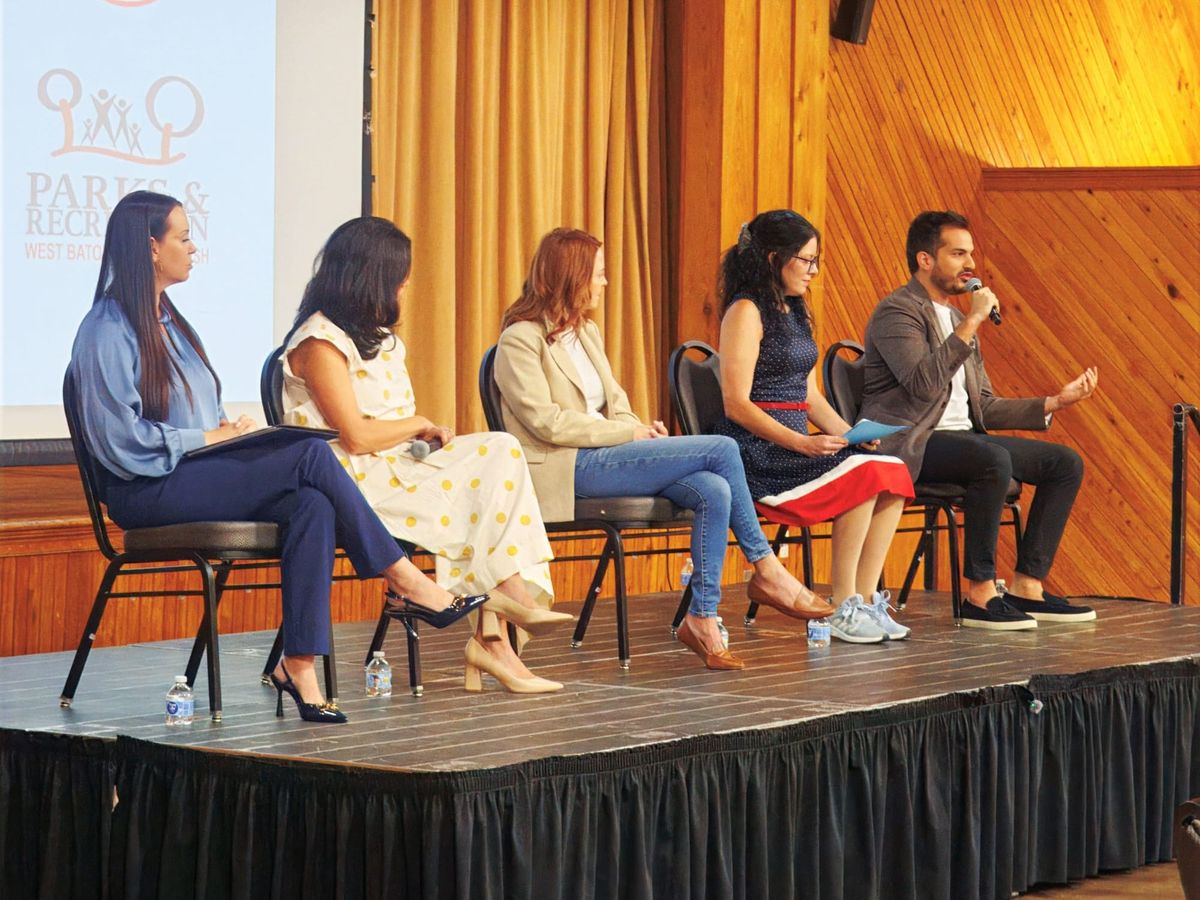
A Placid Refining Company treasurer told a West Baton Rouge Chamber of Commerce luncheon crowd Sept. 16 that her company's IT staff is using artificial intelligence to build its own software. The work replaces a system she priced at about $80,000 a year.
Melanie Clouatre, Placid's treasurer and manager of credit, spoke on the chamber's "AI for Business" panel at the Addis Community Center. The other panelists were:
- Gina Martiny, founder of the Port Allen software firm ManiGinaM
- Jordan Basham, founder of the Baton Rouge social media agency Where To Geaux Social
- Chelsey Blankenship, owner of CLB Consulting
- Gabe Murillo, managing partner of Easton Digital
Stuart Gilly, co-founder of Trility Partners, moderated.
The message from the stage was consistent. AI can save time and money, but a person has to check the work and take responsibility for it.
A refinery builds its own tools
Clouatre said her finance team uses ChatGPT Enterprise to narrow down research on tax codes and accounting standards. The team keeps confidential material out of it, she said, including customers' and suppliers' financial statements.
"We have to be very careful about what we are putting in ChatGPT," she said.
She said she had long wanted a treasury management system to forecast cash and plan how to fund capital projects. Off-the-shelf systems "are just boxes," she said, and a company is expected to fit into them.
Instead of buying one, Placid's IT group is using AI to write applications built around the company's needs. She said those tools can cost a few hundred dollars.
"We're talking about tens of thousands of dollars a year that we're saving," she said.
Four tests before handing anything off
Martiny spoke about "agentic" AI, meaning tools that act on a user's behalf by sending emails or working inside business accounts.
For beginners, she recommended starting with one routine task where you already know what the correct result looks like. She said the task should meet four tests: it can be reversed, it's repeated often, a person reviews the result, and the user takes responsibility for it.
"You must own the responsibility for any output that goes out," she said. "You cannot blame the AI for a bad email that went out."
Martiny also warned that many apps built quickly with AI leave users' personal data exposed. Her firm offers repair work on such apps.
Keeping the human in marketing
Basham said AI-written social media posts are starting to look alike. She uses AI for early ideas and keeps the finished product her own.
"I have to still be the human behind what's going on," she said.
Blankenship said she had AI review six years of email campaigns for a fishing rodeo client. It suggested reusing the client's video content in its emails, and she said this year's email results were the best the client has had.
Start with a plan
Gilly closed on a point several panelists raised: decide what problem you're solving before opening an AI tool.
"Nobody has to worry about a security breach on pencil and paper," he said.