West Baton Rouge's Newest Child Advocacy Program Is Just Getting Started — and Already Changing Lives
CASA of the 18th JDC launched in 2023 as the last program of its kind in Louisiana. Two and a half years later, 23 volunteers are fighting for 59 children in court — and they need more help.
WEST BATON ROUGE PARISH — When CASA of the 18th Judicial District Court launched in September 2023, it was the last program of its kind to form in Louisiana. It had no cases, no trained volunteers, and two staff members staring at each other wondering where to begin.
Two and a half years later, 23 volunteers are actively advocating for 59 children across West Baton Rouge, Iberville, and Pointe Coupee parishes — children pulled from their homes by the state, cycling through foster placements, and navigating a court system where the attorney assigned to represent them may meet them for the first time the day of the hearing.
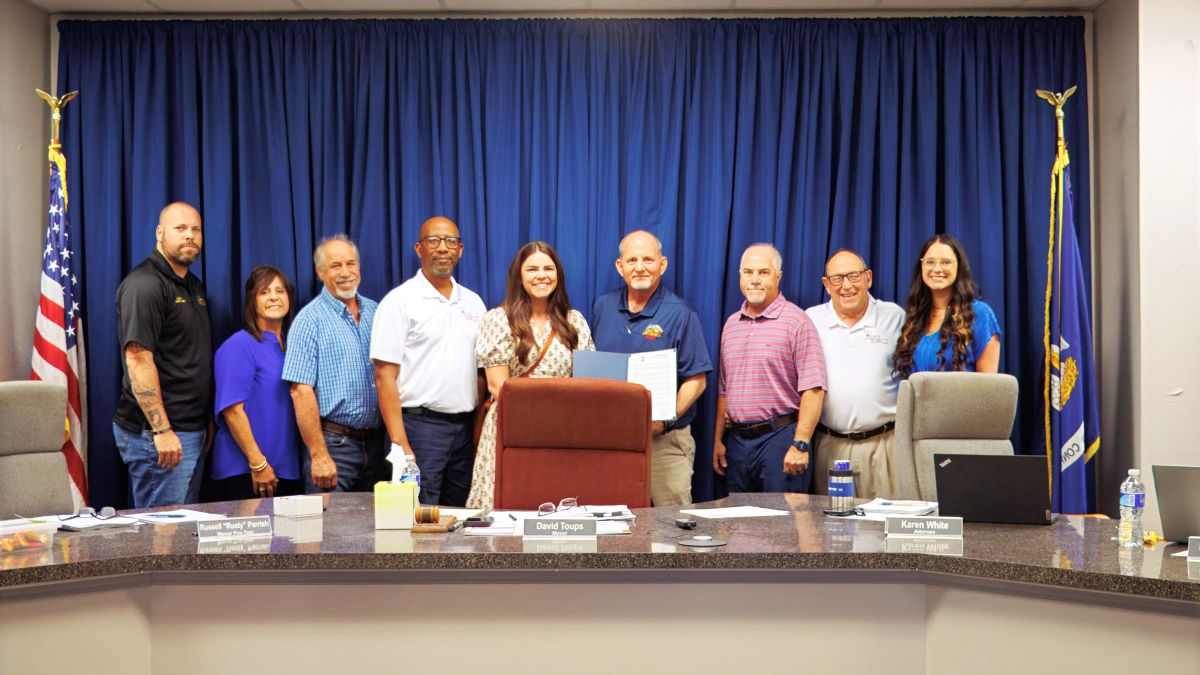
This month, every major governing body in West Baton Rouge Parish took notice. The Addis Town Council, Port Allen City Council, WBR Parish Council, and Brusly Town Council each passed proclamations declaring April Child Abuse Prevention Month.
Hebert appeared before the Parish Council, the Port Allen City Council, and the Brusly Town Council to make the case for community involvement and ask residents to spread the word.
"You never know who's in the room," she told the Port Allen City Council on April 8. "Anytime you hear anything about CASA, please share."
At the Addis Town Council meeting on April 14, board member Dana Larpenteur and volunteer Jessica Cicero represented the organization, speaking to the council about the program's growth and the need for more advocates.
What CASA Does
Court Appointed Special Advocates are community volunteers, sworn in by a judge, and assigned to children who have been removed from their homes by the Department of Children and Family Services. They are not attorneys. They are not social workers. They are often the one consistent adult in a child's life during what is frequently the most chaotic period that child will ever experience.
Each volunteer completes 30 hours of training before being assigned a case. From there, they visit their child face-to-face at least once a month, contact teachers, doctors, therapists, foster parents, and biological parents, document everything, prepare court reports, and attend every hearing to make sure the judge hears what is actually happening in that child's life.
"The attorneys don't really know the kids," Jessica Cicero, an Addis teacher and CASA volunteer, told the town council on April 14. "It's nice to be able to go and represent them and their best interests."
DCFS, stretched thin statewide, cannot fill that gap alone. Hebert was direct about it at the Port Allen meeting: CASAs are the extra set of eyes and ears on cases that DCFS workers — overworked and underpaid — cannot always provide.
A Program Built From Nothing
Three years ago, the 18th JDC was one of the only judicial districts in Louisiana without a CASA program. Children in abuse and neglect proceedings in West Baton Rouge, Iberville, and Pointe Coupee had no court-appointed advocate. That changed in September 2023.
The program now has 30 active cases in West Baton Rouge, 14 in Iberville, and 15 in Pointe Coupee — 59 children currently under advocacy. Last year, the program served 27 children. The growth has been steady, and the need is not shrinking.
Among those 23 volunteers is Port Allen City Councilwoman Charlene Gordon, who serves both her district and an assigned child as a CASA volunteer.
Board members Dana Larpenteur and Warren LeJeune Jr., along with volunteer Jessica Cicero, represented CASA at the Addis meeting on April 14. Larpenteur, a retired attorney who served as Addis town attorney for nearly five decades, helped recruit new advocates and pressed the community to get involved.
What It Looks Like in Practice
At the Port Allen meeting, volunteer Robbie Quick described starting her first case last summer. She had doubts going in — DCFS workers, attorneys, a judge — what role was really left for her?
"I did not expect to have that — I don't want to even say power — just to be so important in the case," she said. Her child is expected to return home in June. "He's so happy and has the prettiest smile that you've ever seen."
Fellow volunteer Chris Murphy, who just received his first case assignment, described his first visit simply: "To see the smile on this child's face — to know that somebody's in their corner to speak for them — it gives you joy."
Cicero put it simply: "My case was one of those where I brought them their first birthday cake they ever had. So it just means a lot to me to make a difference for these kids."
At the Port Allen meeting, Hebert introduced a foster mother who described how her now-adopted son, who is autistic, connected with his CASA volunteer on a level no one else had managed during the process.
"He was a godsend to us," she said.
How to Get Involved
CASA of the 18th JDC is actively recruiting volunteers. The 30-hour pre-service training can be completed around a regular work schedule, and volunteers typically visit their assigned child at least once a month.
To learn more or apply, visit casa18jdc.org, call 225-257-9558, or email info@casa18jdc.org.
Blue pinwheel pins — the national symbol for child abuse prevention — are available throughout the parish this month as a reminder that protecting children is everyone's responsibility.
WBR Independent covers West Baton Rouge Parish government, public safety, and community life. Story tips: editor@wbrindependent.com
#WBRIndependent #WestBatonRouge #CASA #ChildAbusePrevention