WBR Parish Pipeline Ordinance Raises State Preemption Concerns
Louisiana's top pipeline regulator says portions of a West Baton Rouge Parish ordinance introduced during the last Council Meeting may conflict with state and federal law — and that the parish never consulted his office before drafting it.
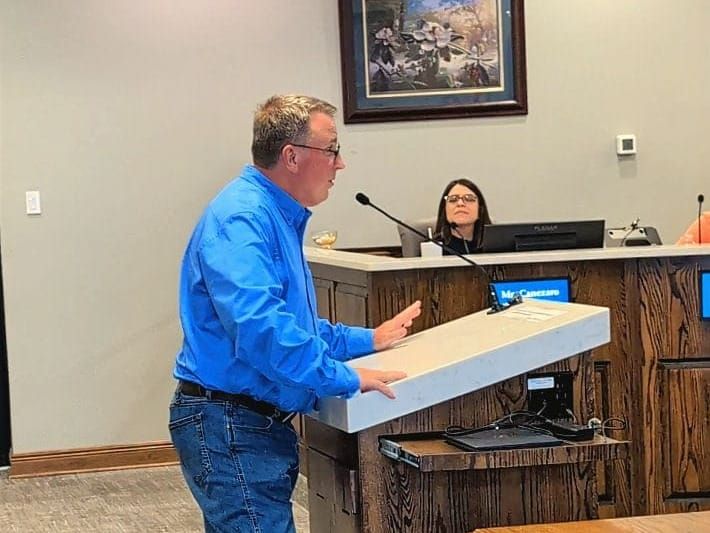
State's top pipeline regulator says ordinance may conflict with federal law — and says nobody called him first.
PORT ALLEN — The West Baton Rouge Parish Council introduced an ordinance Thursday night, June 11 that would require permits for pipelines crossing parish rights-of-way, but Louisiana's top pipeline regulator says portions of the measure may conflict with state and federal law — and that his office was never consulted before it was drafted.
Under federal law, when a higher level of government already regulates an area like pipeline safety, local governments cannot write their own competing rules — a legal principle known as preemption.
Dustin Davidson, Secretary of the Louisiana Department of Conservation and Energy, told WBR Independent on Friday, June 13, 2026 that the ordinance "does cross into" safety regulation territory in some respects, and that the parish did not contact his department during the drafting process.
"No sir, not that I'm aware of," Davidson said when asked whether WBR Parish had reached out before the ordinance was introduced.
The ordinance, introduced as Agenda Item 14.A at Thursday's regular council meeting, would create a parish permit requirement for any pipeline or similar facility constructed or installed in public rights-of-way. It would also require that applicants submit construction plans to the Department of Public Works, obtain insurance coverage, and maintain a three-year bond guaranteeing restoration of any disturbed road surface.
A public hearing is scheduled for June 25, 2026.
A question of jurisdiction
Pipeline safety regulation in the United States operates under a clear chain of authority. The federal Pipeline and Hazardous Materials Safety Administration, known as PHMSA, holds overall regulatory responsibility for the nation's hazardous liquid and gas pipelines. Louisiana's Department of Conservation and Energy inspects and enforces pipeline safety regulations for intrastate pipelines under a formal agreement with PHMSA — one Davidson said his department takes seriously.
"We have a perfect grade with PHMSA when it comes to pipeline inspection," Davidson said. "We will continue to do our job as laid out by the legislature and through the agreements that we have with PHMSA."
The federal Pipeline Safety Act expressly prohibits state and local governments from adopting safety standards for pipeline facilities that conflict with or duplicate federal requirements. Federal courts have interpreted this broadly — in one 2023 case involving a county pipeline ordinance in Iowa, a federal judge ruled that local permit requirements, setbacks, and other pipeline-related regulations were preempted by federal law even when they merely restated federal standards.
Davidson said his primary concerns with the WBR ordinance involve provisions touching on private landowner rights and the use of existing pipeline rights-of-way. The state, he said, actively encourages pipeline operators to use existing right-of-way corridors rather than establishing new ones — and local permit requirements could complicate that.
"We would prefer to see that pipeline right-of-way continue to be used as opposed to making new right-of-ways and creating other land use issues," he said.
Legal challenges likely
Davidson said his department does not plan to intervene in the parish's proceedings, but predicted that pipeline operators would likely push back on their own.
"I think there will likely be some significant legal challenges that come from this," he said. "Operators currently operate in that parish right now, and there will likely be a need to build additional pipeline capacity. Any impediments to that — companies typically will do what they need to do to ensure that their investment is protected."
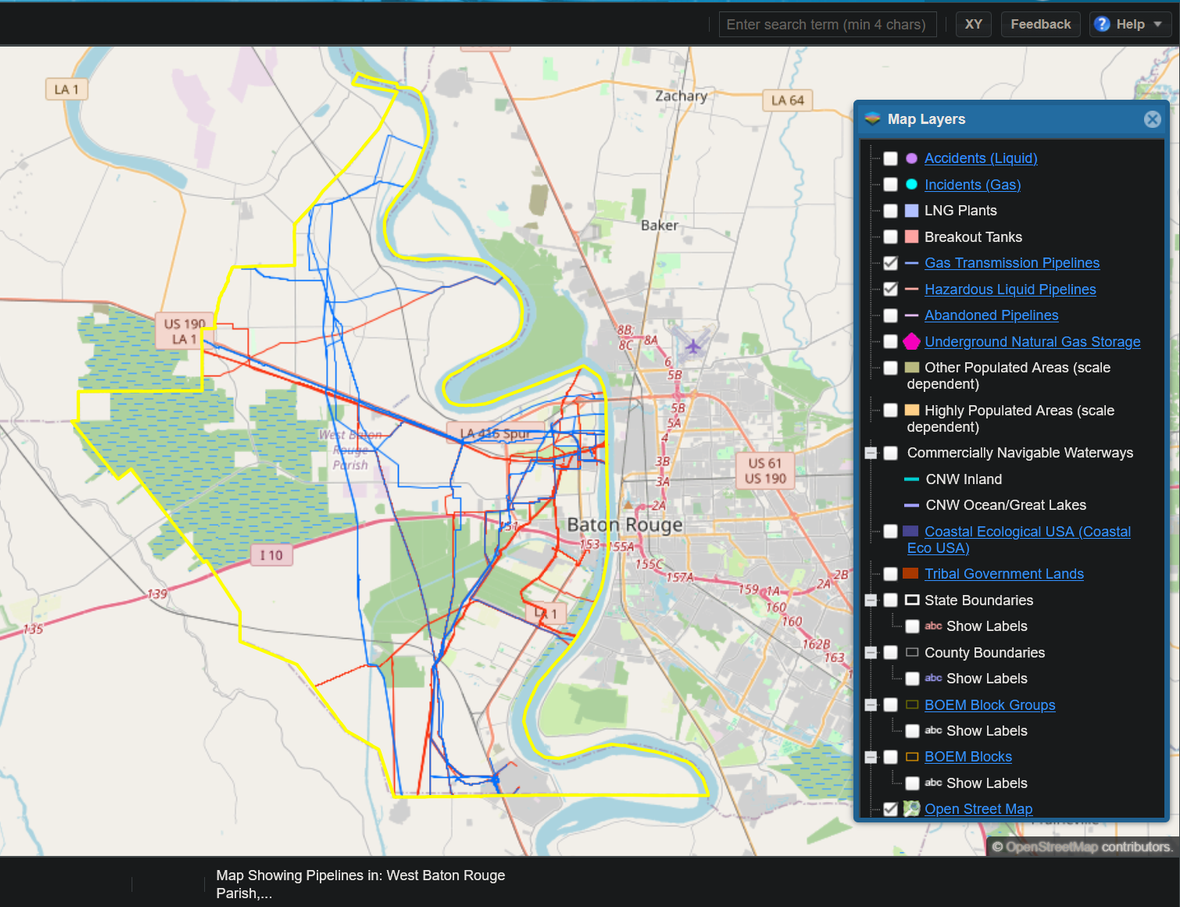
Federal pipeline maps show multiple gas transmission and hazardous liquid pipelines crossing West Baton Rouge Parish, according to the PHMSA National Pipeline Mapping System public viewer.
Questions go unanswered
WBR Independent submitted questions on Friday, June 13, 2026 to Parish President Jason Manola and parish legal counsel asking whether the ordinance was reviewed for preemption issues before introduction, whether any state or federal agency was consulted, and whether the parish intends to proceed with the June 25 public hearing. The parish responded the following week on Tuesday, June 16, 2026.
Parish legal counsel, in a statement forwarded by Parish President Jason Manola, did not address any of the four questions posed by WBR Independent. The statement confirmed the June 25 public hearing date and said "any public comments, questions or concerns" regarding the ordinance would be addressed at that time.
The pipeline ordinance is one of three ordinances introduced during the June 11, 2026 meeting. The other two — updates to subdivision definitions and a comprehensive rewrite of parish sign regulations — are also scheduled for public hearings on July 9, 2026.
The WBR Parish Council meets on the second and fourth Thursday of each month at 5:30 p.m. at the WBR Government Building, 880 N. Alexander Ave., Port Allen.