WBR Parish Pipeline Ordinance Could Cost Taxpayers Without Improving Safety, State Regulator Warns
Louisiana's top pipeline regulator says the WBR Parish Council's amended pipeline ordinance could create an authority the parish lacks the capability to enforce — raising costs for taxpayers without improving safety. The state was never sent the amended version.
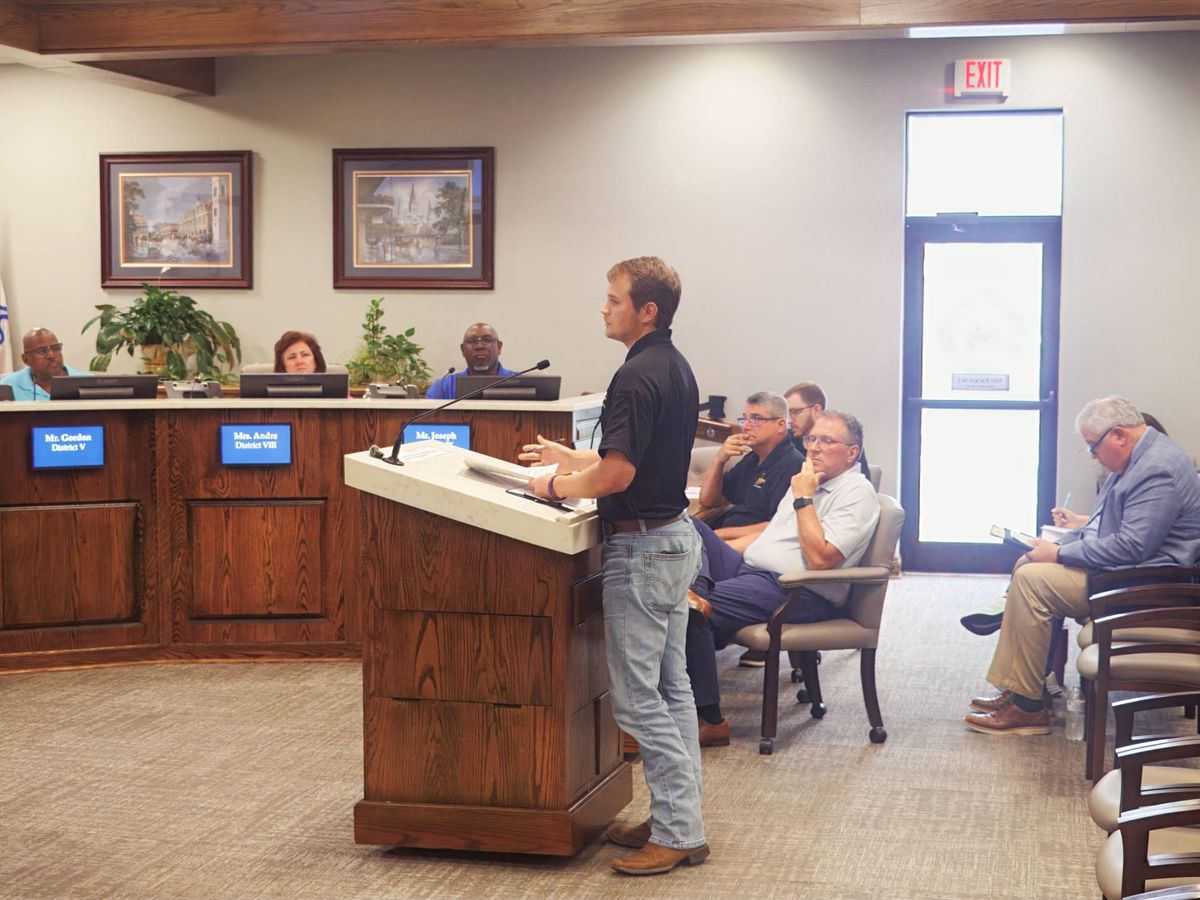
State regulator says parish never sent updated ordinance — and warns it could cost taxpayers without improving safety.
PORT ALLEN — The West Baton Rouge Parish Council unanimously approved a pipeline permit ordinance on June 25 after rewriting key sections at the podium — but Louisiana's top pipeline regulator says the parish never sent his office the amended version, and the preemption concerns he raised before the vote have not gone away.
Louisiana Department of Conservation and Energy Secretary Dustin Davidson told WBR Independent this week that his department has not received any information on the amended ordinance from parish officials.
"C&E has not received any information on the passage of such an amended ordinance from representatives of the Parish government or members of the Parish Council, as local ordinances do not involve our department," Davidson said in a written statement.
Davidson confirmed that Director of Public Works Brandon Bourgoyne called his office two days before the June 25 vote. Davidson said questions about the ordinance's intent "still remain unclear" and that he advised Bourgoyne to engage the parish attorney over potential legal challenges.
The call came two days after WBR Independent published a report in which Davidson said the original ordinance "does cross into" safety regulation territory preempted by state and federal law, and that the parish had not consulted his office before drafting it.
What changed — and what didn't
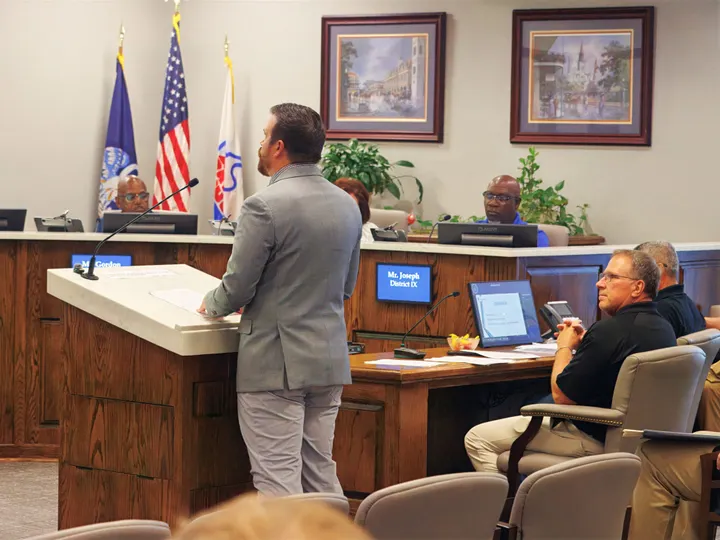
Before opening the public hearing on June 25, Bourgoyne proposed floor amendments deleting language that would have extended the parish's permitting authority over pipelines on private property. The revised ordinance limits the permit requirement to pipelines crossing parish-owned roads, rights-of-way, canals, drainage ditches, levees, and bayous.
"We kind of just reworded it more towards Ascension Parish's ordinance," Bourgoyne told the council. "That way it's just clarifying it's only for our infrastructure, our right-of-way, stuff like that."
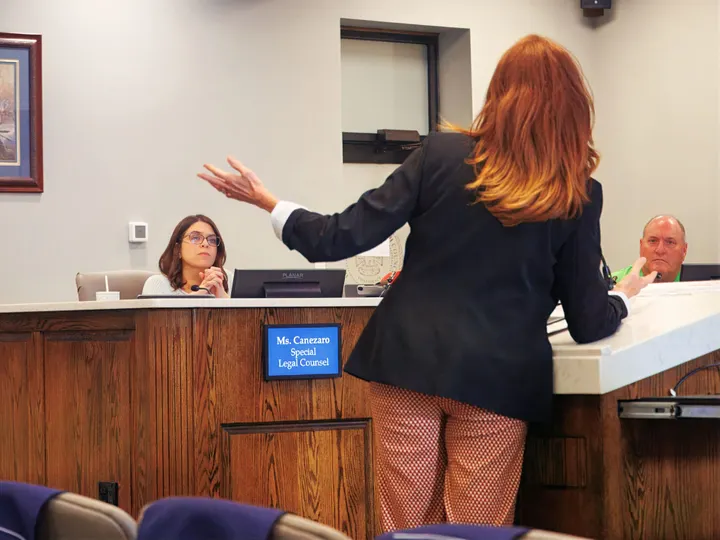
Special Legal Counsel Kristen Canezaro told the council she had additionally recommended the language changes.
"I found the way it was written, the intent of the language was rather vague and ambiguous," Canezaro said. "After reviewing Ascension Parish, I thought it was more thorough and accurate to what Brandon was trying to accomplish."
Canezaro's opinion addressed whether the parish has the general authority to require permits — a point Davidson has not disputed. Davidson's concern is whether specific provisions cross into federally preempted safety regulation, a separate legal question that was not addressed during the meeting.
In his latest statement, Davidson said the preemption question has not been resolved by the amendments.
"The concerns of potential pre-emption of federal authority over pipelines by local government could remain for any local parishes or municipalities seeking to regulate pipeline construction and operation, as PHMSA ultimately holds the overall regulatory responsibility," Davidson said.
Davidson added that local governments are "generally prohibited from adopting any regulatory or safety rules that conflict with federal requirements where the federal government has asserted authority."
A question of capability
Davidson raised a new concern in his latest response — whether the parish has the resources to enforce what it passed.
"The concern here is that a local governmental body could be attempting to create an authority it lacks the capability to effectively enforce — which could result in higher costs to the taxpayers without a comparable increase in safety, an overwhelmed parish government office that could slow down even necessary preventative maintenance, or rules that exist but are not enforced," he said.
Davidson also predicted legal challenges from the industry.
"Issues will most likely be raised by pipeline operators in that parish that might seek to challenge local authority over such operations," he said.
Industry weighs in at the hearing
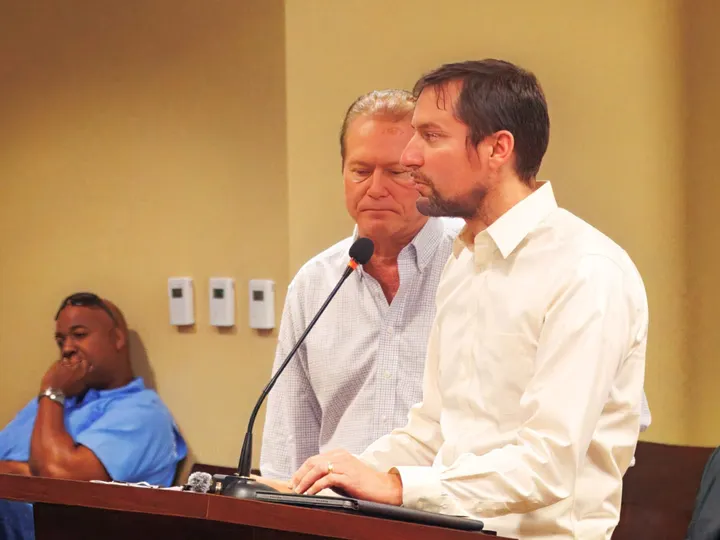
Rory Pisani Denicola, who identified herself as working in the pipeline industry, told the council at the June 25 hearing she had significant concerns about the original language but was satisfied with the amendments.
"Y'all basically just want to make sure that if anything is happening with pipeline, we're getting a permit, making sure y'all are knowing and aware of it, not just to stop it," Pisani Denicola said.
She confirmed the revised ordinance aligned with the notification process already in practice between pipeline companies and the parish.
Bourgoyne said the ordinance formalizes what has been an informal process. He said Florida Gas Transmission had recently called asking whether the parish had a pipeline permit process and was told it did not.
"Some parishes do have that," Bourgoyne said. "We kind of looked around and saw that Ascension Parish has an ordinance for pipeline permits and created this ordinance for basically that purpose."
Legal authority affirmed, preemption unanswered
Canezaro addressed a question raised by council members about whether the parish had legal jurisdiction to enact the ordinance.
"The United States Court of Appeals Fifth Circuit has held that you do have the right to enact a valid ordinance requiring permits with reasonable conditions at the local government level," she said. "It's within your policing powers under your zoning legislative function to do so."
However, Canezaro's opinion addressed the parish's general authority to require permits — not whether specific provisions of this ordinance conflict with federal pipeline safety law, which was the concern Davidson raised.
Drainage concerns drive support
Council Vice Chair Alan Crowe offered the strongest argument for the ordinance, pointing to ongoing drainage problems caused by shallow pipelines.
"We have multiple situations in the parish right now," Crowe said. "We have drainage ditches that we can't drain because we have pipelines too shallow to dig the drainage ditches. We're not doing it because we're trying to restrict pipelines. We're trying to protect the safety and welfare of the people in this parish."
Council Chairman Carey Denstel added: "We're not in the pipeline business. We're in the public's business."
Council member Atley Walker announced that pipeline safety awareness training will be held in Addis on September 1 and 2, and recommended council members attend.
The amended ordinance passed unanimously. Motion by Mr. Lane, seconded by Mr. Hotard.
Under federal law, when a higher level of government already regulates an area like pipeline safety, local governments cannot write their own competing rules — a legal principle known as preemption. The federal Pipeline and Hazardous Materials Safety Administration, known as PHMSA, holds overall regulatory responsibility for the nation's pipeline infrastructure. Louisiana's Department of Conservation and Energy enforces pipeline safety regulations for intrastate pipelines under a formal agreement with PHMSA.
WBR Independent first reported on state preemption concerns surrounding this ordinance on June 23, 2026. That story is available at https://www.wbrindependent.com/wbr-pipeline-ordinance-preemption/
The WBR Parish Council meets on the second and fourth Thursday of each month at 5:30 p.m. at the WBR Government Building, 880 N. Alexander Ave., Port Allen.