WBR Parish Council Rolls Back Millages, But Rising Property Values Tell a Different Story
The WBR Parish Council approved its largest millage rollback in parish history, but rising property values from the 2024 reassessment tell a more complicated story. Officials say they've returned $20 million to taxpayers since 2020.
Council rolls forward two millages while rolling back six others — the largest rollback in parish history.
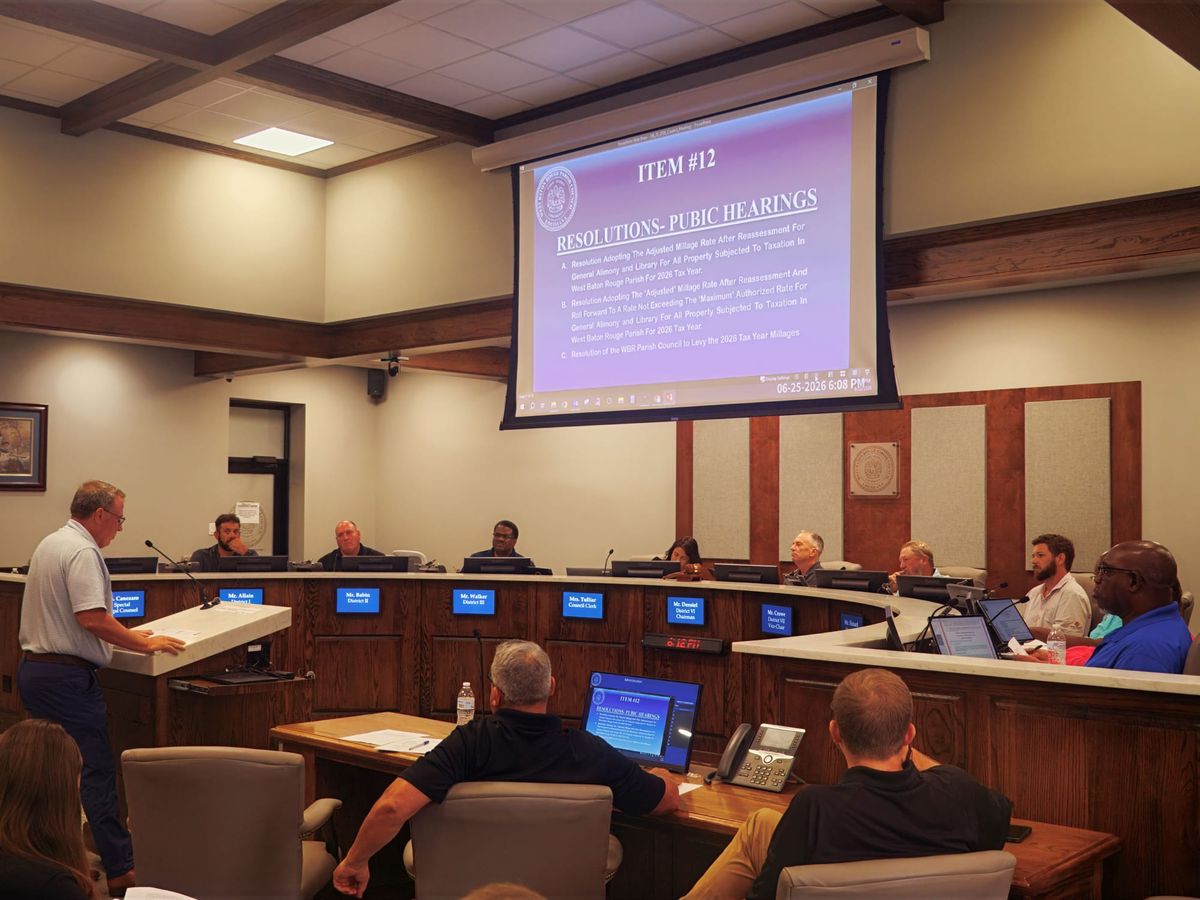
PORT ALLEN — The West Baton Rouge Parish Council approved its 2026 tax year millage rates Thursday night, June 25, rolling back six of eight millages it controls while rolling forward two as required by state law — a process officials said has returned more than $20 million to taxpayers over the past six years.
Chief Financial Officer Chance Stephens presented a breakdown of the parish's millage history, showing that the council has collected below the maximum rates voters approved.
"In six years, we're returning $20 million, and we didn't have to," Council Chairman Carey Denstel said. "I want to make sure whoever's watching this tonight and may watch it next week understands this."
What the council approved
The council voted on three separate resolutions covering the 2026 tax year millages.
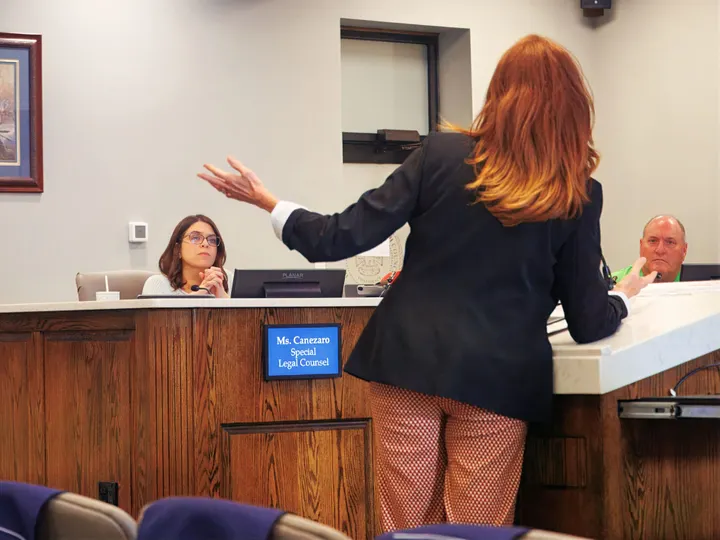
The first two resolutions addressed General Alimony and 911 Communications — the only two millages being collected above the state-adjusted maximum rate. General Alimony was set at 3.52 mills and 911 Communications at 3.00 mills, matching the prior year's rates. Because both exceed the state-adjusted maximum of 3.19 and 2.72 mills respectively, state law requires the council to formally vote to "roll forward" — a process that triggers a mandatory public notice about collecting taxes above the adjusted rate.
Stephens drew a line between rolling forward and raising taxes.
"These have all been voted on by the people of West Baton Rouge," he said. "We are not collecting more than what was voted on. Actually, we're collecting much less."
State law requires the roll forward process — including the public hearing and two-thirds vote — whenever a taxing authority collects above the state-adjusted rate. However, taxing authorities may also choose to adopt the lower adjusted rate without a roll forward.
The third resolution set the remaining six millages — Community Center, Health Unit, Museum, Council on Aging, Recreational Facilities, Library, and Drainage — all at rates below the voter-approved maximums.
In total, the council is collecting 25.82 mills of the 32.07 mills voters have approved — a rollback of 6.25 mills, the largest in parish history.
All three resolutions passed unanimously.
The numbers
Stephens told the council that each mill generates approximately $800,000 in revenue. At the proposed rates, the parish expects to collect approximately $20.6 million — roughly $5 million less than the maximum $25.6 million it could legally collect, and $3.3 million less than the state-adjusted maximum.
Since 2020, the council has rolled back millages each year, starting with two mills in the first year and increasing to this year's 6.25 mills. Stephens calculated the cumulative savings to taxpayers at $20,188,000.
"You've got to thank previous administrations and previous councils," Stephens said when asked how the rollbacks were possible. "They approved budgets and were good stewards of the money, building up healthy fund balances."
However, the rollback figures do not account for the effect of rising property values. Louisiana law requires property to be reassessed every four years. When property values increase — as they did in the 2024 reassessment — the same millage rate applied to a higher assessed value generates more revenue. A parish can collect more total dollars while charging a lower rate per mill, meaning taxpayers may not see a reduction in their actual tax bill even when millages are rolled back.
How WBR compares
Denstel asked Stephens whether other parishes in the region were doing the same. Stephens reported that among surrounding parishes — West Feliciana, Iberville, Pointe Coupee, and East Feliciana — none were rolling back parish-wide. East Baton Rouge had a few individual taxing districts collecting below the state-adjusted rate, but not a comprehensive rollback like West Baton Rouge.
"We are unique, and we want to stay unique if we can," Denstel said.
A resident asks questions
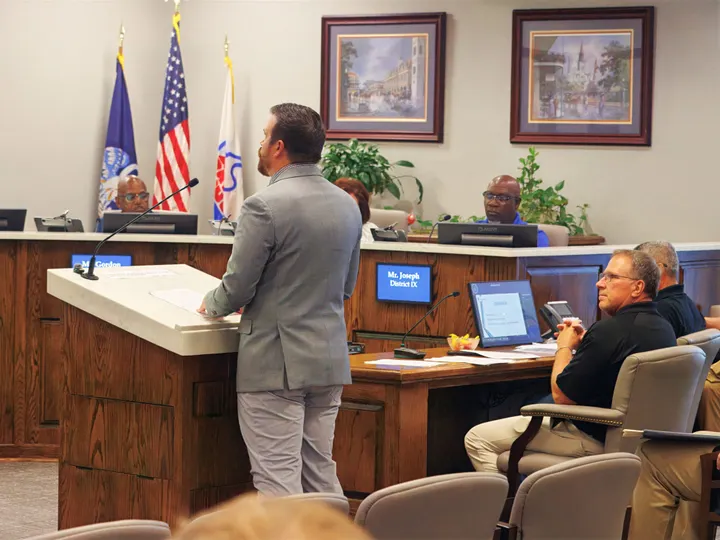
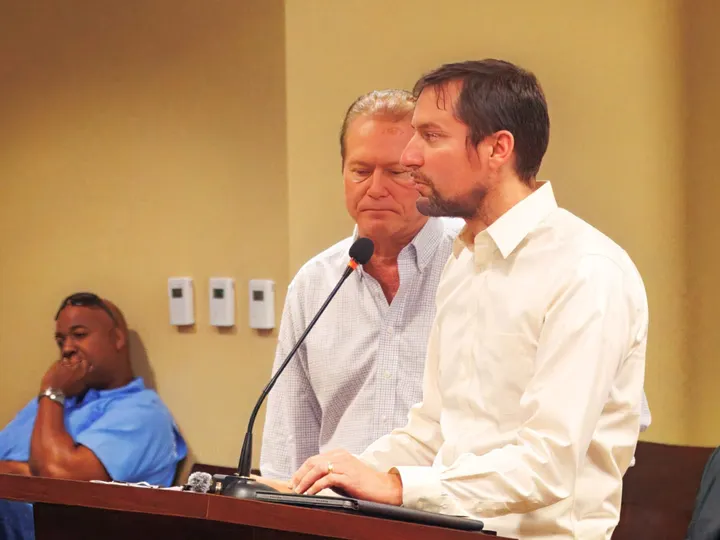
Brogan Benoit, an Addis resident and veteran, addressed the council during public comment after a Monday conversation with Denstel about the millage process.
"I had concerns about the proposed millage rates and wanted to better understand how they would be determined," Benoit said. "Transparency builds trust, and I appreciate the willingness to provide that information."
Denstel praised Benoit for getting involved.
"I think it's just fantastic that you approached and wanted to know what your parish government is doing," he said. "We need the young people to get involved."
Officials push back on perception
Parish President Jason Manola told the council the rollbacks reflect a deliberate policy of fiscal restraint.
"We don't want to have savings accounts," Manola said. "We only want to collect what we need to collect to provide the services that our residents of West Baton Rouge Parish deserve. We don't want to collect any more than that. The rest we want to keep in their pocket."
Denstel said the council's approach to transparency was intentional.
"When we present something like this, we're not going to cherry-pick the six that we're actually rolling back," Denstel said. "We're going to show you the six that we're rolling back. But we're also going to show you the ones that we have to roll forward. We're going to tell you why we have to. We're not doing it for any type of clicks or any types of likes. We want to do it to make sure that our taxpayers know exactly what is expected."
Vice Chair Alan Crowe said the council and administration work through the numbers together.
"We sat together with a group of councilmen and the administration," Crowe said. "We look at the fund balances, we look at the budget, and we look at everything involved and come up with areas that we can save the taxpayers a little bit of money."
How roll forward works
When property values are reassessed — which happens every four years in Louisiana — the state calculates a new "adjusted" millage rate. That adjusted rate is designed to generate the same amount of revenue as the previous year, accounting for changes in property values.
If a local government wants to collect more than that adjusted rate — even if the amount is still below what voters originally approved — it must hold a public hearing and vote to "roll forward." State law requires a public notice stating the amount of the increase, which can create the appearance of a tax hike even when the actual rate hasn't changed.
In WBR Parish's case, the council is collecting 3.52 mills for General Alimony and 3.00 mills for 911 Communications — the same rates as last year, but above the newly adjusted maximums of 3.19 and 2.72 mills. The public notice estimated the additional revenue from this roll forward at $800,000.
HB 570, passed this legislative session, would change the roll forward process starting in 2027. The bill removes the current "use it or lose it" provision that penalizes taxing authorities for collecting below their maximum rate. That change depends on voters approving a companion constitutional amendment on November 3.
The WBR Parish Council meets on the second and fourth Thursday of each month at 5:30 p.m. at the WBR Government Building, 880 N. Alexander Ave., Port Allen.