Louisiana Supreme Court justice takes newspaper to trial over 2019 editorial
A Louisiana Supreme Court justice is suing The Advocate over a 2019 editorial in a trial underway in Iberville Parish. DA Tony Clayton returned as plaintiff's counsel. The defense accused Hughes of coaching a witness during a break.
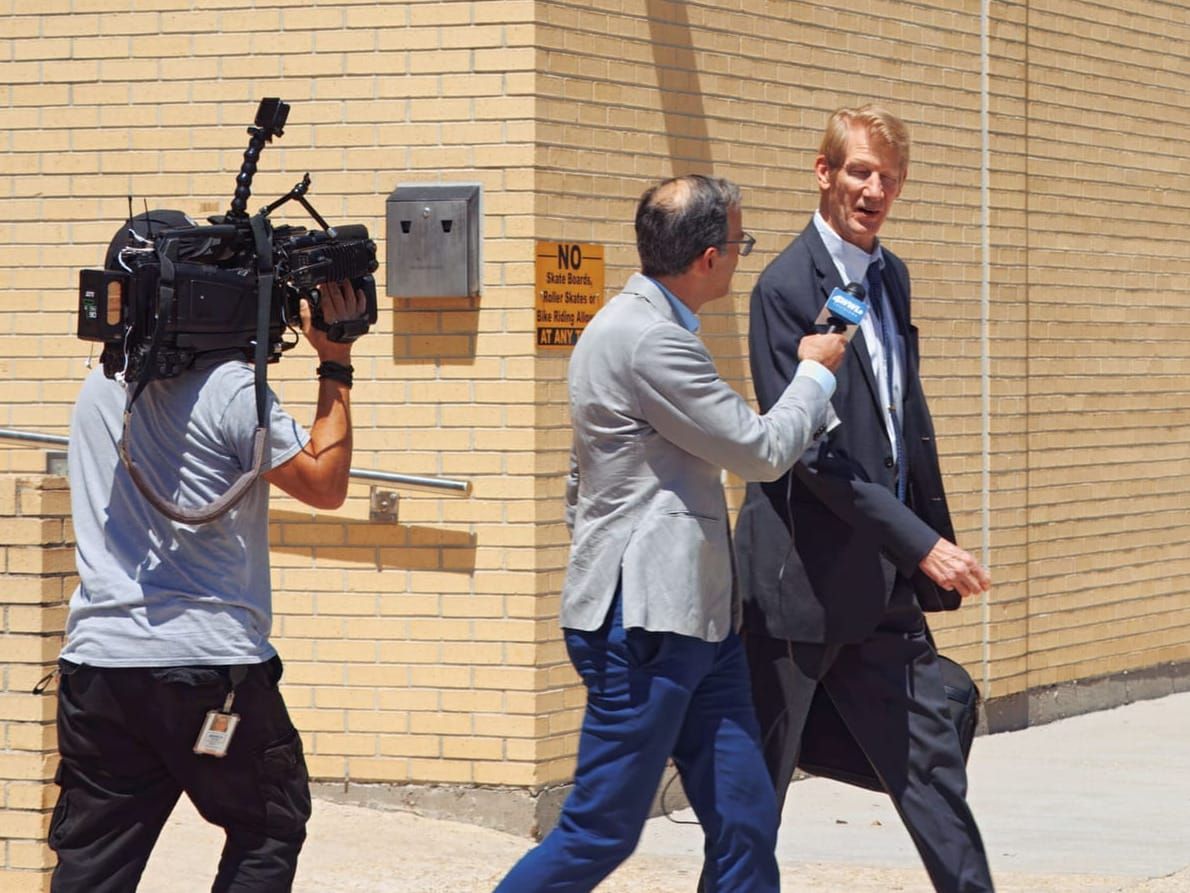
DA Tony Clayton enrolled as plaintiff's counsel during jury selection; defense accuses Hughes of coaching witness during trial break
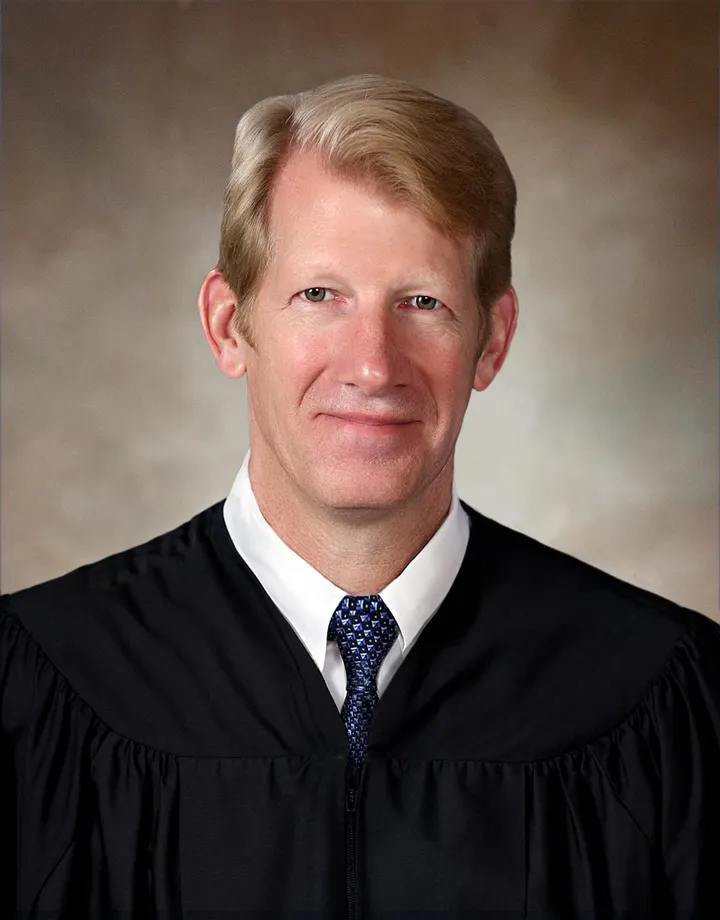
PLAQUEMINE -- A Louisiana Supreme Court justice is suing the state's largest newspaper, and the trial is underway in an Iberville Parish courtroom.
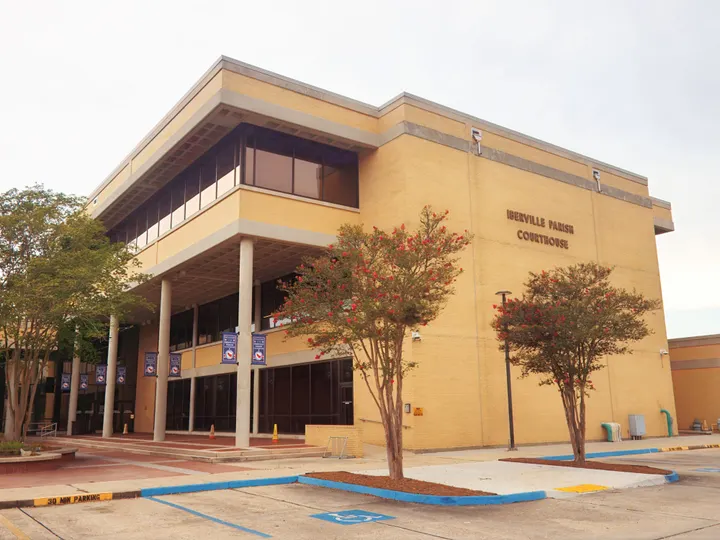
Testimony began Tuesday in Jeff Hughes v. Capital City Press LLC, the defamation case Justice Jefferson Davis Hughes III filed against The Advocate in 2020. A jury was seated Monday after a full day of voir dire. The case is being heard in the 18th Judicial District Court, Division A, before Judge J. Kevin Kimball.
Hughes claims a June 25, 2019 editorial published by The Advocate defamed him. The editorial followed a series of investigative stories by The Advocate and WWL-TV that revealed Hughes had written secret apology letters during his time as a Livingston Parish district judge, acknowledging that "justice suffered" in a child custody case he oversaw in the late 1990s.
The defendants are Capital City Press LLC, which operates as The Advocate, along with former editor Peter Kovacs and editorial board member Danny Heitman. They are represented by the New Orleans law firm Sternberg, Naccari & White LLC.
The custody case behind the editorial
The 2019 Advocate and WWL-TV reporting centered on Hughes's handling of a Livingston Parish custody case involving a 5-year-old boy whose stepfather faced criminal child abuse charges.
Court records show Hughes was dating attorney Berkley Durbin while Durbin represented the boy's mother in the custody dispute. Durbin also represented the stepfather in his criminal case. Durbin withdrew as the mother's attorney before Hughes issued his final custody ruling, but her involvement with the family continued.
In March 1999, Hughes awarded custody to the mother and ordered the boy returned to her care despite objections from child welfare authorities, who argued the child was in danger while living with the stepfather. The stepfather later pleaded no contest to abusing the boy. The boy's grandmother, Brenda Nicholson, was jailed for 11 days after she refused to return the child.
Federal prosecutors and the Louisiana Judiciary Commission investigated Hughes over his handling of the case. Years later, Hughes sent Nicholson a formal apology acknowledging that "justice suffered" because of his actions.
Hughes was elected to the Louisiana Supreme Court in 2012 and reelected in 2018. The Advocate's 2019 editorial, headlined "Before Jeff Hughes landed on Louisiana Supreme Court, he made a mockery of justice," was published after the newspaper's investigative reporting brought the custody case and the apology letters to light.
Hughes has been publicly disciplined before. In July 2021, the Louisiana Supreme Court censured him for violating five judicial canons after a former Hammond city council member, Johnny Blount, alleged Hughes offered him $5,000 to switch his endorsement in a 2019 Supreme Court race. Hughes denied offering money but acknowledged telling Blount he could receive more from another campaign. The court found his conduct "brought the judiciary into disrepute." Blount is on both sides' witness lists for the current trial.
A case that kept growing
The lawsuit started with one article. At a June 2022 deposition, Hughes testified under oath that his defamation claim was based solely on the June 25, 2019 editorial. He said other Advocate articles would be used to show "actual malice" but confirmed he was not suing over them.
That changed. Hughes later filed amended petitions adding new defendants and new claims. In late July 2026, just weeks before trial, his attorneys identified 156 Advocate articles they said were defamatory, submitting them in a late-night email on July 23.
Kimball limited the trial to the original 2019 editorial but kept Kovacs and Heitman as individual defendants.
The jury waiver question
Hughes waived his right to a jury trial in writing in 2022. Both he and The Advocate signed a consent motion, and Kimball signed it into a court order. The waiver was negotiated between Hughes's then-counsel and the defense.
Despite that written waiver, the case is proceeding as a jury trial. The defense had asked Kimball to strike the jury demand, arguing that adding two individual defendants who were Advocate employees at the time should not undo a binding court order.
Tony Clayton enters the case
On Monday morning, 18th Judicial District Attorney Tony Clayton enrolled as counsel for Hughes.
Clayton's involvement in this case goes back years. Court records show he was listed as counsel for Hughes during the 1st Circuit Court of Appeal's anti-SLAPP proceedings in 2021. He was counsel of record when the appellate court ruled in Hughes's favor that December. He was still representing Hughes in May 2022 when he personally negotiated the jury waiver with defense counsel Scott Sternberg. And he was Hughes's lawyer during the June 2022 deposition where Hughes testified under oath that his defamation claim was limited to one article.
Clayton withdrew from the case at some point after 2022. On Monday, he returned.
Clayton told the jury panel during voir dire that he has a private law practice in addition to his role as district attorney. Louisiana law allows DAs to maintain private practices.
During jury selection, Clayton opened with a hypothetical about a person in authority falsely accusing someone of a violent crime against a child. Defense counsel objected, telling the jury that The Advocate never accused Hughes of committing any crime. Kimball addressed the jury after a sidebar.
Clayton also referenced an anti-SLAPP ruling in the case. Louisiana's anti-SLAPP law is designed to prevent public officials from using lawsuits to stifle free speech. It requires a plaintiff to show a likelihood of success before a defamation case involving public issues can proceed.
The Advocate filed an anti-SLAPP motion to dismiss the case in 2020. Kimball denied that motion, finding Hughes had met his burden. The 1st Circuit Court of Appeal affirmed that ruling in December 2021, writing that Hughes had shown a likelihood of success on both the falsity of the statements and on actual malice. The appellate panel awarded Hughes an additional $7,500 in attorney's fees.
During voir dire Monday, Clayton initially told jurors the ruling found the probability of Hughes's success was "highly likely." His co-counsel corrected him. The actual order states that Hughes "has established a probability of success on his claim." The ruling is not a finding of defamation. It means the case met the threshold to go to trial.
Secrecy and the Judiciary Commission
The trial comes with an unresolved question in the background.
According to court filings and reporting by WWL-TV, The Advocate's attorneys filed a Judiciary Commission complaint against Hughes. The Louisiana Supreme Court, with Hughes recused, allowed a "Confidential Party" to delay action in a commission matter until August 31, two weeks after the trial began.
The defense argued in a brief last week that Hughes is using judicial secrecy "as both a sword and shield." In a dissent from the Supreme Court's decision not to delay the trial, Justice John Michael Guidry wrote that the defendants were being subjected to "a trial by ambush."
The defendants say they may not know the full facts of the underlying case until after the trial is over.
"Under these circumstances, we're being asked to go to trial with one hand tied behind our back because we're being deprived of knowable information," Kovacs told WWL-TV.
What's at stake
During voir dire, Clayton asked prospective jurors whether they could support a verdict of $10 million or more if the law and evidence supported it. Several jurors said they could.
Defense counsel asked jurors whether they would give Hughes's claims more weight simply because he is a Supreme Court justice. At least one juror said yes, reasoning that a justice "should know defamation" and would not bring the case without evidence to support it.
Kimball addressed the jury twice on the issue, telling them Hughes "is just like any other plaintiff" and has not sat on any hearings or made any rulings in his own case.
Opening statements
Opening statements were delivered Tuesday afternoon after the jury was seated.
Plaintiff's attorney Caleb Didriksen told jurors The Advocate called Hughes "a scoundrel," "unsuitable to sit in judgment of others," and accused him of "gross ethical lapses." Didriksen argued that Durbin withdrew from the Nicholson custody case seven months before Hughes ruled, that attorney W. Robert Gill was counsel of record at the custody trial, and that Hughes never ruled in favor of any client represented by Durbin in any case.
Didriksen said Hughes went to The Advocate's offices after the articles were published, met with approximately six or seven staffers, showed them documents proving their facts were wrong, and asked for a retraction. The Advocate refused, Didriksen told the jury, and continued publishing.
"We will ask you for ten million dollars," Didriksen said.
Defense attorney Sternberg told jurors the case comes down to one question: whether The Advocate published something false with actual malice. He said the standard requires the plaintiff to prove by clear and convincing evidence that the newspaper knew its statements were false or acted with reckless disregard for the truth.
Sternberg told the jury no witness would testify that The Advocate acted with reckless disregard. He noted that Hughes never asked for a correction of the original June 23, 2019 news story, and that his meeting with Advocate staff about the June 25 editorial was conducted "off the record." Sternberg said the word "retraction" was never used by Hughes, and that the editorial was an opinion commenting on a news story about a matter of public concern.
Sternberg also disclosed that a woman named Kristen Fusilier came forward after the original reporting, stating that she had a custody case before Hughes while he and Durbin were dating, that Durbin appeared on the opposing side, and that Hughes did not disclose the relationship.
First witness: Keith Fisher
The plaintiff's first witness was Keith Fisher, a law professor at St. Thomas University in Miami who was presented as an expert in judicial ethics, legal ethics, and constitutional law.
Fisher testified that he reviewed the court records from the Nicholson case and found no evidence Hughes violated any judicial ethics rule. He said there was no evidence Hughes ruled on a case while Durbin was enrolled as counsel of record, and that the Advocate's characterizations of Hughes's conduct were unsupported by the documents.
On cross-examination, defense attorneys challenged Fisher's conclusions. Fisher acknowledged that he had not been provided court minutes showing Hughes made an interim custody decision in favor of the mother approximately three days after Durbin withdrew, not just the final ruling seven months later. He conceded that if Durbin had withdrawn only three days before a ruling, it would raise ethical concerns. He agreed that a judge in Hughes's situation should have disclosed the romantic relationship on the record. He admitted he had not seen the apology letters before testifying.
Defense attorneys then presented Fisher with the consent discipline records from a separate matter in which the Louisiana Supreme Court censured Hughes in 2021. The documents showed Hughes went to the home of former Hammond city council member Johnny Blount during a 2019 Supreme Court race and discussed money being paid to campaign workers. Hughes and the Judiciary Commission stipulated that the conversation left Blount with the impression Hughes was offering $5,000 to switch his support to another candidate.
Fisher told the court he had never seen the documents. Hughes's attorneys had not provided them. When asked whether the stipulated facts concerned him as a judicial ethics expert, Fisher said he could not comment because he had only seen a portion of the record.
Fisher initially said New York Times v. Sullivan, the landmark actual malice case central to the trial, was decided in the 1950s. It was decided in 1964. He also acknowledged this was his first time testifying on judicial ethics in a courtroom and that he has never been licensed to practice law in Louisiana.
Witness coaching accusation
During a break in Fisher's testimony, defense attorney Montero told Judge Kimball that she observed Hughes speaking to Fisher while the witness was still under examination. She said Hughes told Fisher words to the effect of "you need to say that."
Hughes denied coaching Fisher, saying he was speaking with Woody Jenkins, the next witness, about unrelated matters including their ages and life expectancy. Jenkins was brought before the court and confirmed Hughes's account.
Kimball denied the defense motion to strike Fisher's testimony, noting the conversation did not occur in the presence of the jury. But the accusation and the exchange are part of the trial record.
The trial is expected to continue through the week. Kimball told attorneys he has another trial set for Monday and may need to push the case into the weekend if testimony runs long.
The 18th Judicial District Court serves Iberville, West Baton Rouge, and Pointe Coupee parishes.
Hughes and his attorneys did not respond to requests for comment from other media outlets covering the trial. WBR Independent will seek comment from all parties after the trial concludes.
This is Part 1 of WBR Independent's trial coverage.
Disclosure: Sternberg, Naccari & White LLC, which represents The Advocate in this case, also serves as local counsel for WBR Independent in a separate public records matter. WWL-TV, which has reported on this case, is also represented by Scott Sternberg in a separate matter.
John Summers is the editor and publisher of WBR Independent. Contact him at editor@wbrindependent.com.