

Secret recordings could cost you in court under a Louisiana bill unless you're catching corruption
A bill moving through the Louisiana Legislature would require anyone recording a private, in-person conversation to notify all participants first. The Senate added protections for documenting public corruption before sending HB 410 to the full chamber for a final vote.
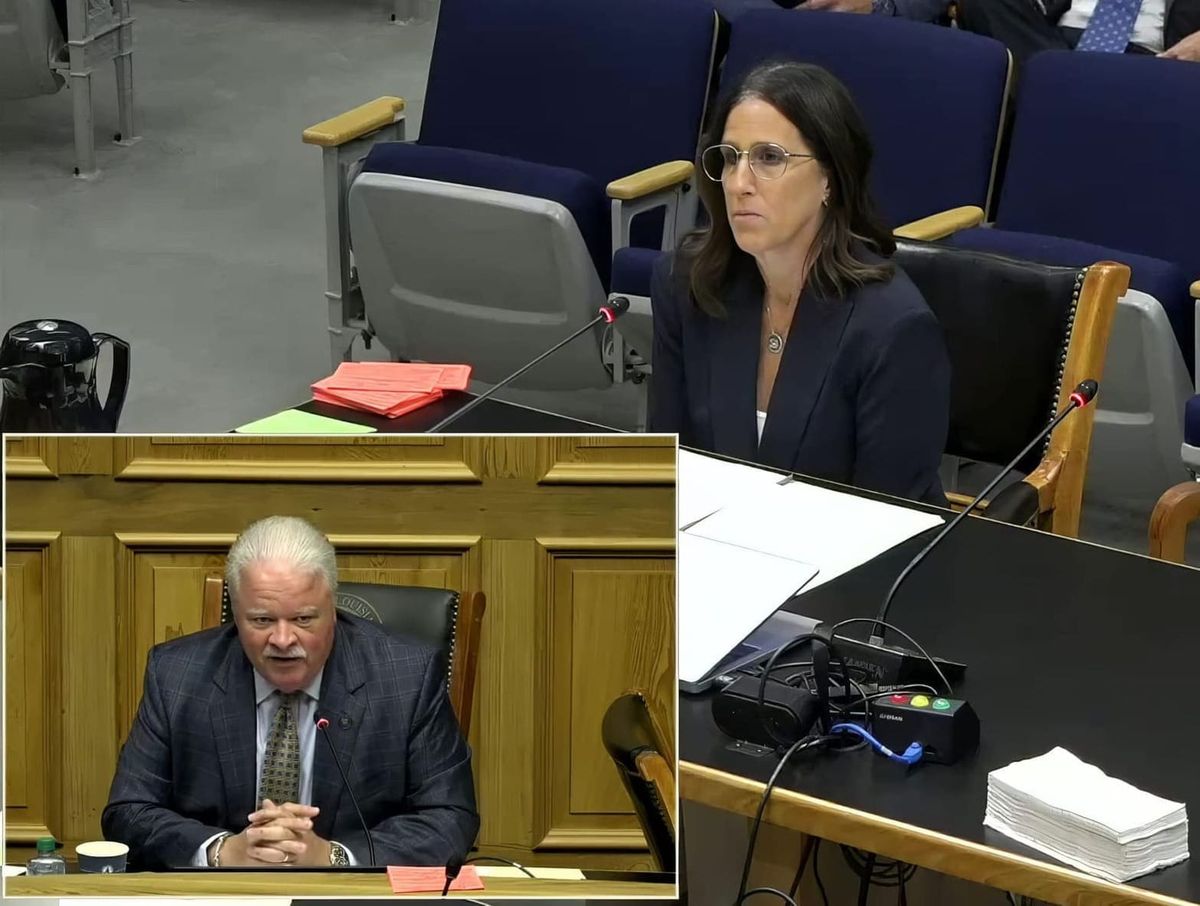
A bill awaiting a final Senate vote would change the rules for recording private, in-person conversations — and lawmakers just added protections for people who catch public corruption on tape.
If you've ever pulled out your phone to record a conversation without telling the other person, a bill advancing through the Louisiana Legislature would make that grounds for a lawsuit.
House Bill 410, by Rep. Laurie Schlegel, R-Metairie, would require anyone using a portable device to record or transcribe a private, in-person conversation to notify all participants first. The bill doesn't make secret recording a crime, but anyone who violates it could be sued for damages, court costs, and attorney fees.
The bill passed the House 54-34 in April and cleared the Senate Judiciary A Committee on May 19, where lawmakers adopted amendments adding protections for people documenting government misconduct. It is now awaiting a final Senate vote before the session ends June 1.
Smart glasses, AI pendants, and a privacy gap
Schlegel told the Senate Judiciary A Committee that she brought the bill for the same reason the Senate unanimously passed SR 86 by Sen. Patrick McMath — a resolution banning recording glasses in the Senate chamber.
"When the legal concept of reasonable expectation of privacy was first being developed, no one could ever imagine smart glasses or AI pendants," Schlegel said, "these devices that look like ordinary everyday items that can secretly record people."
She pointed to a growing trend of women being recorded without their knowledge by men wearing smart glasses outside grocery stores, with the footage going viral on social media. She told the committee that one company sold $7 million worth of recording glasses last year alone, and that Citigroup analysts project 100 million users of wearable recording devices within a few years.
The bill creates a new legal concept called a "direct conversation" — any in-person communication directed at a specific person where a reasonable person wouldn't expect to be recorded. If you're in that kind of conversation and you want to record it, you have to say so.
Louisiana is currently a one-party consent state for phone and electronic recordings under the Electronic Surveillance Act. HB 410 doesn't touch those criminal wiretapping laws. It creates a separate, civil-only standard for in-person conversations: notification, not consent.
"The bill does not change Louisiana's criminal wiretapping laws, it does not affect phone calls, and it does not require consent," Schlegel told the committee.
Fourteen other states already have all-party or two-party consent laws. Schlegel said she modeled HB 410 after Oregon's law, which survived a challenge before the Ninth Circuit Court of Appeals.
What's exempt
The bill includes nine exceptions where notification is not required:
Public or semi-public meetings, including government hearings, press conferences, and rallies. Law enforcement activity, including body cameras, undercover operations, and one-party consent investigations. Emergencies and first responder activities. Public officials performing official duties in public places. Recording law enforcement officers in public. Preserving evidence of a criminal act or proceeding. Preserving evidence for a civil or administrative proceeding. Recording in your own home. And recording a conversation you're not a participant in.
Senate committee adds corruption protections and tightens penalties
The Senate Judiciary A Committee adopted three sets of amendments that reshaped the bill before sending it to the full Senate.
Schlegel herself brought an amendment adding two new exceptions: recordings made to preserve evidence of public corruption, as defined in Louisiana Revised Statutes 11:293, or malfeasance in office under Louisiana Revised Statutes 14:134.
"Some of the remaining opposition in the House was that we want to make sure this bill is not to protect bad actors of elected officials," Schlegel said. "We wanted just to make sure it was very specific that there is an exception if you're obviously trying to preserve evidence of public corruption or malfeasance in office."
That amendment came after testimony from Chris Alexander of the Louisiana Citizen Advocacy Group, who told the committee the bill still lacked an explicit exception for documenting government misconduct. Alexander argued that a public official discussing public business or taxpayer money should not have a reasonable expectation of privacy, regardless of where the conversation takes place — including a bar or a restaurant.
"The Fourth Amendment does not exist to protect public officials or narrow the right of a citizen to document public corruption," Alexander told the committee.
Sen. Samuel Jenkins, D-Shreveport, pushed for additional changes. His amendments added an exception for incidental or background capture of conversations in public places where the recording isn't specifically directed at the individuals. Jenkins also added a requirement that anyone suing under the law must prove actual damages from intentional unlawful recording or dissemination — a higher bar than the original bill set.
Both amendment sets were adopted without objection.
What it means for residents
For West Baton Rouge residents, the practical impact comes down to everyday situations. Recording a conversation with a contractor, a school administrator, or a neighbor over a property dispute would require notification under HB 410. Forgetting to mention you're recording — or choosing not to — could expose you to a lawsuit, provided the other party can prove actual damages.
The bill wouldn't affect recording at a Parish Council meeting, a West Baton Rouge School Board hearing, or any public government proceeding. And it wouldn't prevent someone from recording a public official they believe is engaged in corruption or malfeasance in office.
One distinction worth noting: the bill only applies to in-person conversations. Phone calls are still governed by the Electronic Surveillance Act, which allows one-party consent recording. So if a government official calls you on the phone, you can still record that call without saying a word about it. But if that same official asks you to come talk in person instead, and you want to record, you'd have to notify them — unless one of the bill's exceptions applies.
Meta, the parent company of Facebook and maker of the Ray-Ban Meta smart glasses, filed cards in opposition to the bill at the committee hearing but did not testify.
The Louisiana Press Association has also opposed the bill.
Where it stands
HB 410 passed the House on April 9 by a vote of 54 to 34. It was referred to the Senate Judiciary A Committee on April 14.
The committee reported the bill with amendments on May 19. Those amendments were read and adopted on the Senate floor May 20, and the bill was referred to the Legislative Bureau. On May 21, it was reported without Legislative Bureau amendments and passed to third reading and final passage.
A final Senate vote has not yet been taken. The 2026 Regular Session ends June 1.
This is a developing story. WBR Independent will update this article after the Senate takes a final vote.